
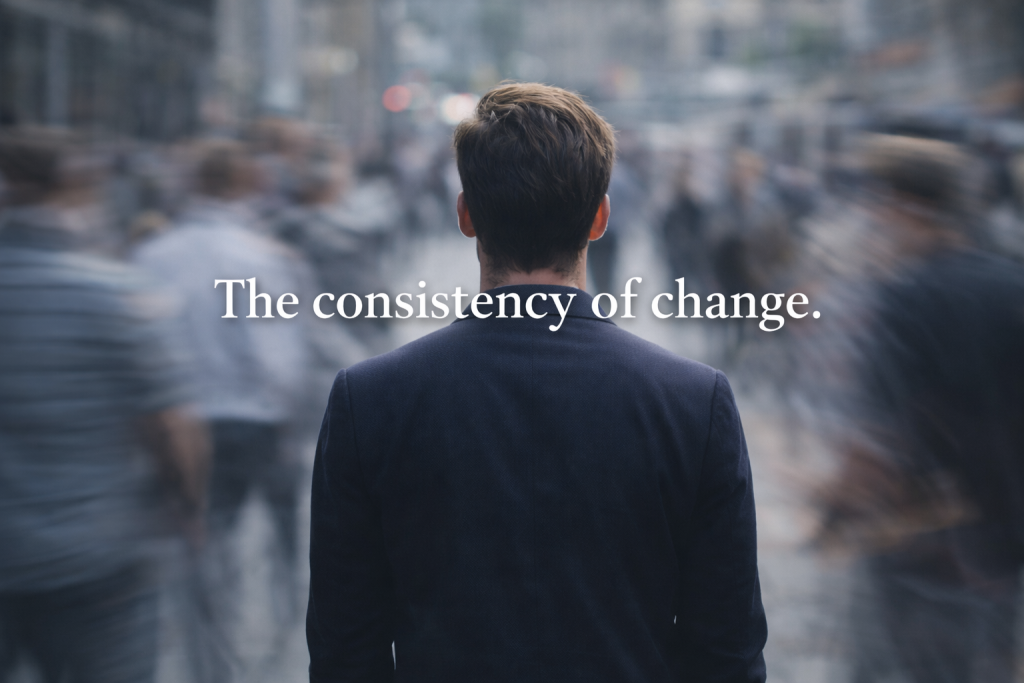
Change has become part of everyday work. That much is not new.
What does feel different is the pace of it, and what people are expected to carry alongside it.
In most organisations, people are being asked to adapt all the time. New systems come in, priorities shift, tools change, and ways of working evolve. At the same time, the expectation to deliver has not eased. If anything, it has increased.
People are not just being asked to do their jobs. They are being asked to keep changing how they do them, constantly.
At some point, that becomes hard to sustain.
If you spend time with teams, you start to hear a different story from the one that shows up in reports.
Work is still getting done. Projects are moving. Things are being delivered.
But people feel stretched. Managers are trying to balance more than they reasonably can. Some changes land well, others do not quite stick. On paper, everything appears to have been adopted. In practice, it is more uneven.
There is often a quiet sense that something is not fully working, even if no one is saying it directly.
It is easy to assume that when change does not land, people are resisting it.
That is not what most people are doing.
They are making decisions about where to put their time and energy. They are focusing on what helps them get through the day and deliver what is expected of them. They are putting some things aside. Sometimes they find workarounds, not because they want to, but because they need to keep things moving.
This is not resistance. It is people trying to manage what is in front of them.
And it points to something simple.
It is not that people cannot handle change. It is that there is only so much change anyone can absorb at once.
Many organisations are still focused on how to deliver change effectively.
That is still important. But it is only part of the picture.
A more useful question right now might be whether the change being introduced can actually hold in the reality people are working in. Whether it will still work when things are busy, when priorities compete, when pressure builds.
Because that is when the real test happens.
You can see this clearly in how new technologies are being introduced.
There is no doubt about their value. They can save time, reduce effort, and make certain tasks easier.
But the way they show up in practice isn’t always straightforward.
Customers can end up going through automated processes that do not solve their issue. Teams are sometimes expected to use tools they do not yet fully understand. Managers are expected to guide others through change while managing everything else already on their plate.
None of this is intentional. It is just happening at speed.
But it does create friction.
And over time, that friction builds. It shows up in small frustrations, in workarounds, in people quietly reverting to what feels more reliable.
There is also something else that is easy to overlook.
Technology can produce a lot very quickly. It can generate content, pull together information, and create plans.
What it cannot do is understand how something feels to the people experiencing it.
It cannot tell when a message lands flat. It cannot sense when a team is overwhelmed. It cannot pick up on the small signals that something is not quite right.
People can.
You can usually tell when something has been put together quickly, without much thought. It might be clear and structured, but it feels impersonal. When that happens, people notice. It changes how seriously they take it.
That human layer still matters more than we sometimes realise.
Some organisations are starting to adjust their approach to this.
They are not necessarily slowing everything down, but they are being more deliberate. They are clearer about what really needs to happen now and what can wait. They are giving managers more support to make decisions locally. They are paying more attention to what is actually happening day to day, not just what is being reported.
They are also more willing to pause and ask whether the timing is right, rather than pushing everything through at once.
That shift, on its own, makes a difference.
This is not about doing less for the sake of it.
It is about making sure that what is being introduced has a real chance of working.
It is about helping people build confidence with new tools, not just expecting them to pick them up. It is about keeping a human option where it matters, for both customers and teams. It is about recognising that people are not separate from change. They are where it either works or does not.
Change is not going to slow down.
If anything, it will keep increasing.
What will matter is how well organisations understand what their people actually need to keep up, not just in the short term but over the long term.
That takes more than plans and delivery.
It takes judgment. It takes attention. And it takes a genuine understanding of how work is really getting done.
If any of this feels familiar, you are not alone.
A lot of leaders are starting to notice the same patterns, even if they are hard to describe.
Sometimes the most useful thing is to step back and look at the bigger picture. Not just what is changing, but how it is all landing across the organisation.
That is often where the most valuable shifts start.